Tracking Viewer Transitions Between Streaming Services Amid Major Content Drops
Ben Hartmann · Oct 27, 2026
Tracking Viewer Transitions Between Streaming Services Amid Major Content Drops
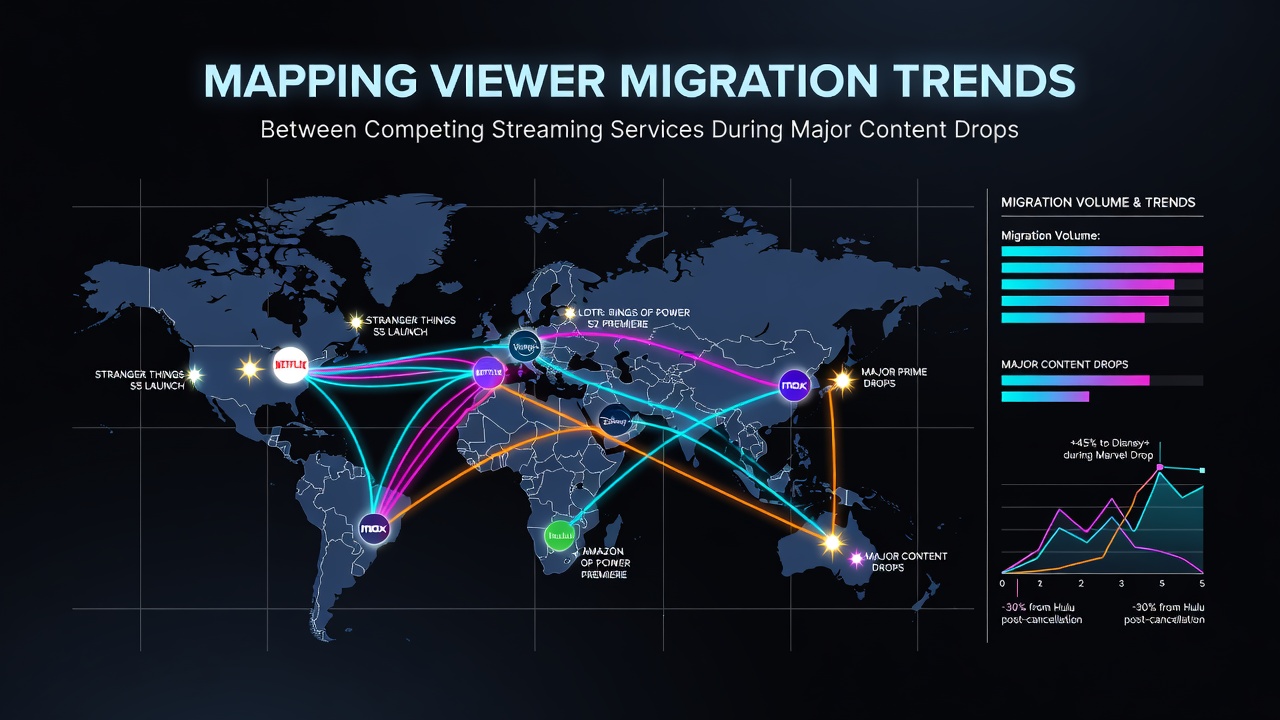
Analysts have documented clear patterns in how audiences move between streaming platforms when exclusive titles launch on one service or when popular series conclude on another, and these movements have become measurable through subscription data and viewing logs collected in October 2026. Researchers at several media tracking firms noted that viewers often sample new releases on one platform before returning to their primary service or exploring alternatives based on catalog depth and pricing tiers.
Data Sources Reveal Consistent Migration Signals
Figures from industry monitoring groups show that major content drops trigger temporary spikes in account activations on the hosting service, followed by partial outflows once the initial viewing window closes, and these patterns hold across North American and European markets where multiple platforms compete directly. Data collected by the Canadian Radio-television and Telecommunications Commission indicates that households managing two or three subscriptions demonstrate the highest mobility rates during these events, switching primary viewing devices or pausing one service in favor of another for several weeks at a time.
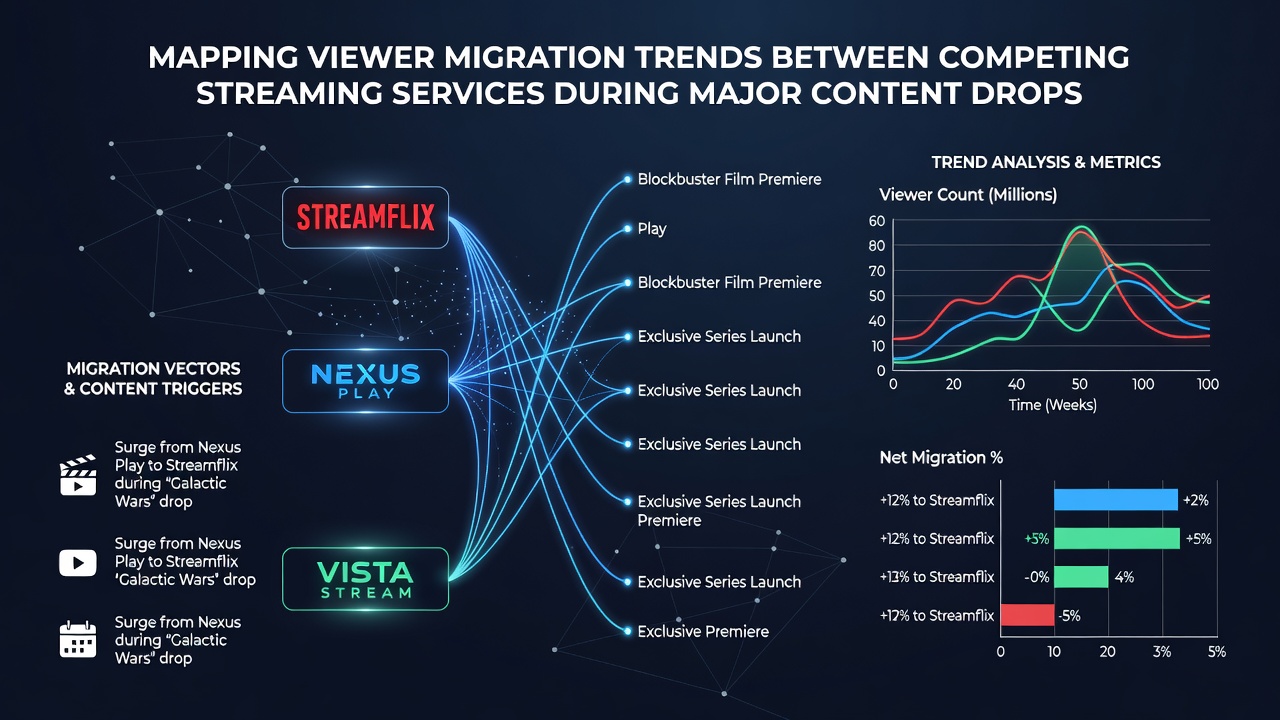
Platform operators track these shifts through metrics such as concurrent stream counts, device logins from new IP addresses, and retention curves that drop sharply after the first three episodes of a flagship series air. Observers note that migration accelerates when one service releases a season finale while a rival drops an entire new season on the same weekend, creating direct competition for viewer hours rather than staggered availability.
Platform Features Influencing Flow Rates
Features such as simultaneous streaming limits, offline download windows, and personalized recommendation engines play measurable roles in whether a viewer stays after sampling content, according to usage reports compiled across multiple services. Those who study subscription behavior have found that platforms offering bundle discounts with broadband providers retain a higher percentage of trial users who arrive during a major drop, whereas standalone services experience faster churn once the highlighted title finishes its run.
Take one analysis covering European markets that found households in urban areas wth fiber connections switched services more frequently than rural subscribers, likely because faster networks support easier account management across devices. Content libraries that emphasize back catalogs alongside new releases also reduce outbound migration, because viewers who finish a buzzy series discover additional titles before canceling.
Regional Variations in October 2026 Trends
Reports compiled in October 2026 highlighted differences across regions, with Australian households showing stronger loyalty to local content platforms during international release windows while Canadian viewers displayed higher cross-border service experimentation. The Australian Communications and Media Authority tracked subscription changes that aligned with local premiere dates rather than global drops, suggesting regional licensing still shapes migration even as global catalogs expand.
Researchers tracking simultaneous releases found that when two services launch comparable prestige dramas within days of each other, viewers tend to sample both rather than committing fully to one, and this behavior appears most pronounced among younger demographics who maintain multiple profiles within shared accounts. Evidence from academic studies on media consumption indicates that price sensitivity rises after these dual-release periods, prompting some households to downgrade tiers or rotate which service remains active month to month.
Measurement Methods and Their Limitations
Tracking firms rely on anonymized panel data, API integrations with device manufacturers, and voluntary user surveys to map these movements, although gaps remain in households that rely on shared passwords or VPN connections that obscure location signals. Studies released by university media labs have cross-referenced payment processor data with viewing logs to estimate how often a single credit card funds multiple services in quick succession, revealing temporary rather than permanent shifts in many cases.
Those analyzing the data emphasize that migration does not always equal cancellation, because some viewers maintain dormant accounts and reactivate them during future drops, creating cyclical patterns rather than linear losses for any single platform. Observers continue to refine models that predict these cycles based on release calendars announced months in advance.
Conclusion
Patterns documented through subscription metrics and viewing logs demonstrate that major content releases drive measurable but often temporary transitions between streaming services, and these movements vary by region, household composition, and platform features available at the time of launch. Continued monitoring by regulatory bodies and research institutions provides ongoing visibility into how audiences allocate time across competing libraries during peak release periods.