Charting Content Delivery Networks: Their Impact on Latency Reduction for Worldwide TV Series Access
Logan Braun · Sep 29, 2026
Charting Content Delivery Networks: Their Impact on Latency Reduction for Worldwide TV Series Access
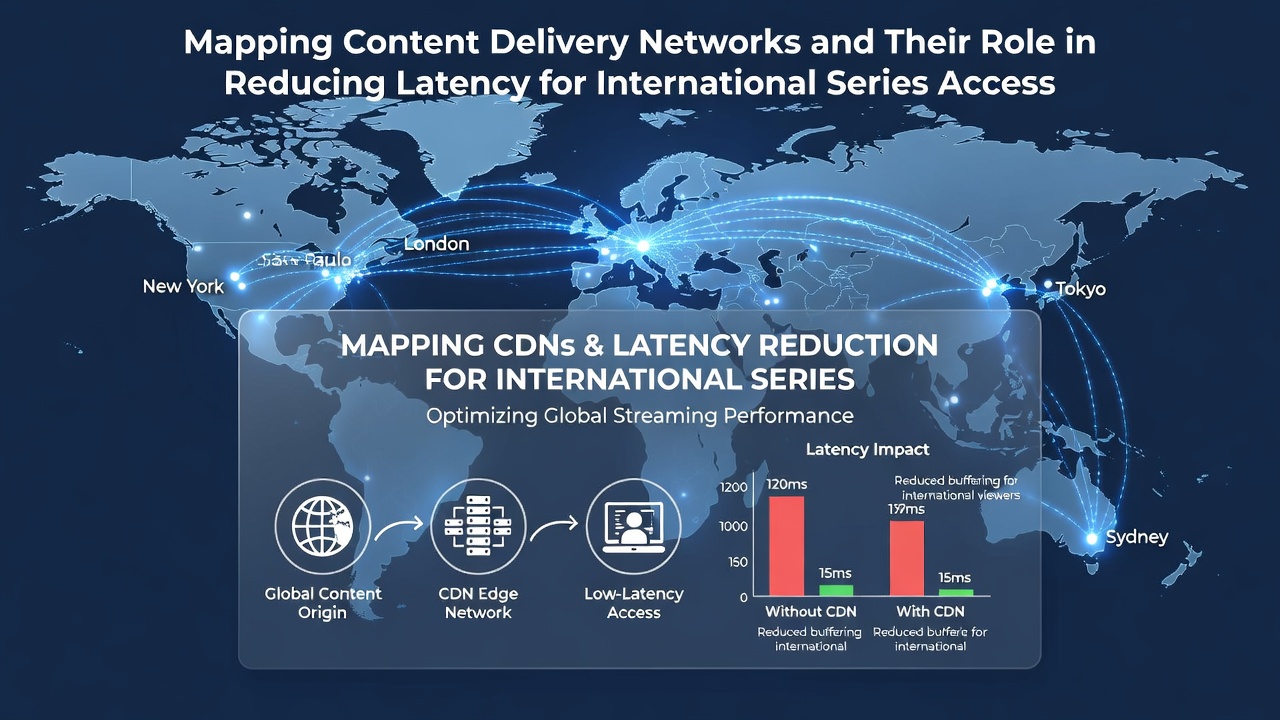
Content delivery networks operate as distributed systems of servers positioned across multiple continents, and they cache video files closer to end users so that international series streams reach viewers without crossing entire oceans on every request. Research from network infrastructure reports shows these networks rely on mapping algorithms that track real-time traffic patterns, server loads, and geographic distances to route requests through optimal paths. Data collected by industry analysts indicates that such mapping reduces round-trip times significantly when audiences in one region access shows produced and hosted on servers in another.
Core Mechanisms Behind CDN Mapping
Mapping begins with DNS-based redirection combined with anycast routing, where multiple servers share the same IP address and the network forwards packets to the nearest available node. Observers note that providers maintain detailed databases of internet exchange points, undersea cable landing stations, and regional peering agreements to update these maps continuously. When a viewer in Sydney requests an episode of a European drama series, the system consults the map and directs traffic to an edge server in Singapore or Tokyo rather than the origin data center in Frankfurt. This process relies on BGP announcements and custom health checks that flag overloaded or degraded nodes within seconds.
Latency Reduction Patterns in Practice
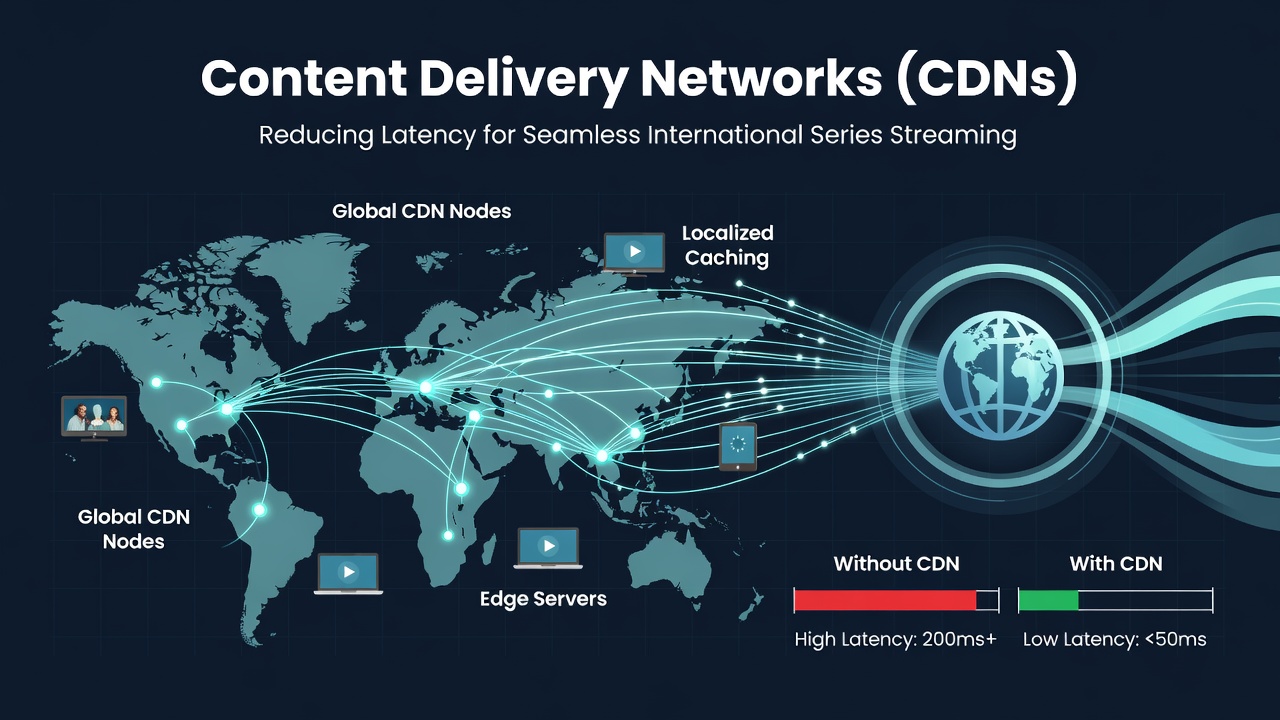
Studies of streaming traffic reveal that average latency drops from 180-250 milliseconds on direct long-haul routes to under 50 milliseconds once content sits at edge locations. Figures from global bandwidth monitoring organizations demonstrate that series with high international demand, such as Korean thrillers or Nordic crime dramas, benefit most because their audience clusters trigger proactive cache warming at dozens of points simultaneously. The mapping layer also accounts for time-of-day shifts, so servers in the Americas ramp up capacity as European evening viewing peaks end and Asian morning demand begins.
Geographic Distribution and Series Access
Providers place edge servers in strategic clusters near major population centers and internet hubs, including facilities in São Paulo, Johannesburg, Mumbai, and Dubai. Those who track these deployments report that coverage expanded notably through 2025, with additional nodes added in secondary cities across Southeast Asia and Eastern Europe. In September 2026, several operators announced further builds in Central America and the Pacific islands to support growing demand for cross-regional series libraries. The result appears in reduced buffering events for viewers accessing dubbed or subtitled content that originates far from their location.
Technical Components Supporting Performance
Mapping systems integrate multiple data sources, including real-user measurements from client devices, synthetic probes between data centers, and third-party internet performance datasets. Algorithms weigh factors such as packet loss rates, jitter, and available throughput before selecting a delivery path, then adjust in near real time when conditions change. Content providers often combine these networks with adaptive bitrate streaming, allowing the same mapped infrastructure to deliver 4K episodes to high-speed connections while serving compressed versions over constrained mobile links without separate mapping logic.
Regional Policy and Infrastructure Influences
Government initiatives in various regions shape where new edge capacity appears. According to ITU reports on digital infrastructure, coordinated investment in broadband backbones across Africa and South America has encouraged CDN operators to extend their maps into previously underserved markets. In parallel, FCC broadband mapping data from the United States helps refine domestic handoff points that connect with international series traffic flows. These policy-driven expansions create denser networks that handle simultaneous global premieres of popular shows without concentrated congestion at any single gateway.
Future Mapping Developments
Operators continue refining predictive models that forecast demand spikes for new seasons or viral international hits, pre-positioning content hours or days ahead of release. Machine learning layers now analyze historical viewing patterns alongside social media signals to adjust cache allocations dynamically. Those monitoring the sector expect continued integration with 5G and satellite networks, which will require updated maps that incorporate moving endpoints and variable orbital paths.
Conclusion
Mapping of content delivery networks provides the underlying structure that enables consistent access to international series across vast distances, and ongoing refinements in geographic coverage plus routing intelligence continue to shrink observable delays for global audiences. The combination of distributed servers, real-time data inputs, and policy-supported infrastructure builds sustains performance levels that match expanding viewer expectations worldwide.